Winnow AI answers compliance questions for lenders, law firms, and fintechs, drawing on an attorney-reviewed library of 100,000+ requirements. In compliance, a wrong answer is a liability, so the product only worked if a skeptical compliance professional was willing to trust it.
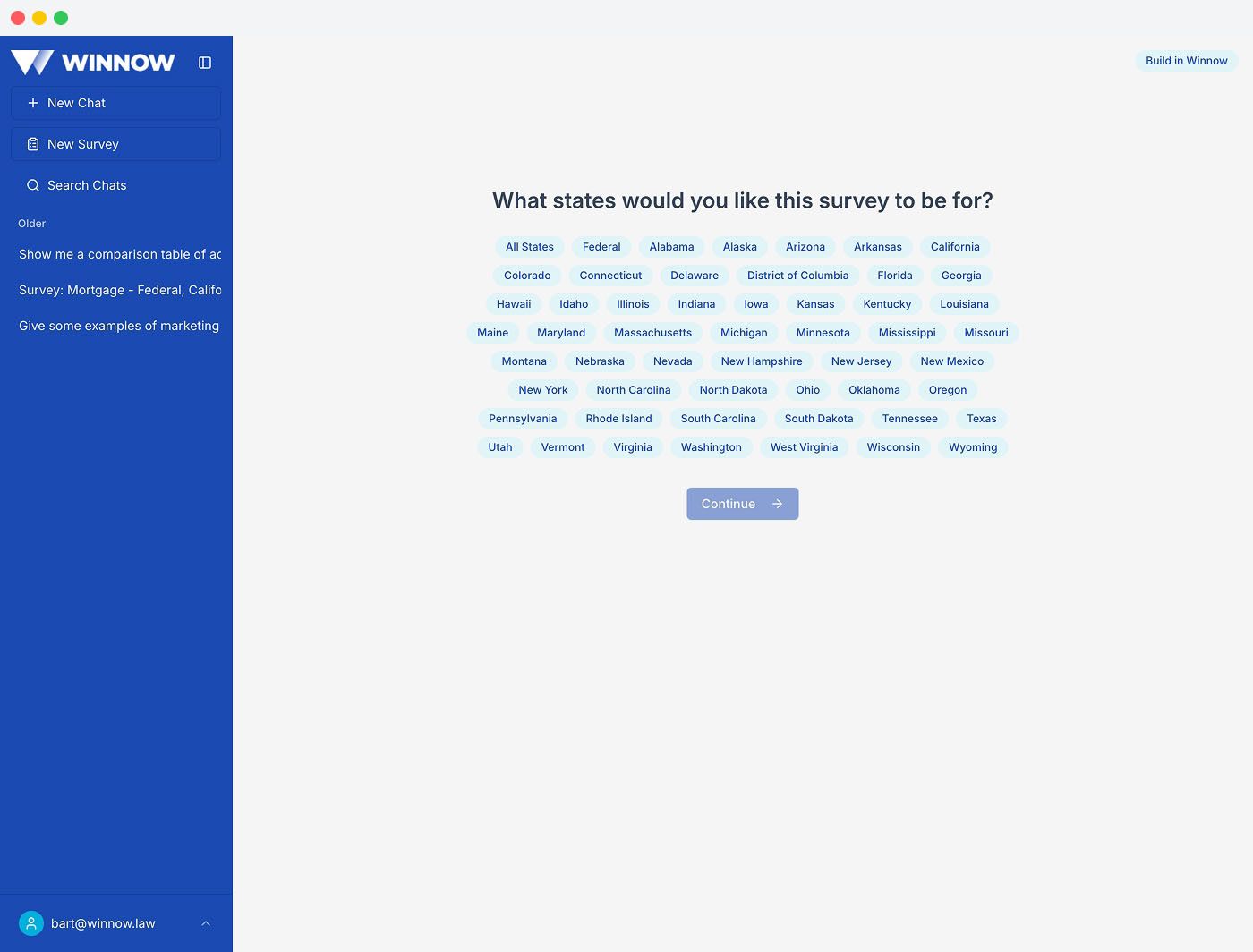
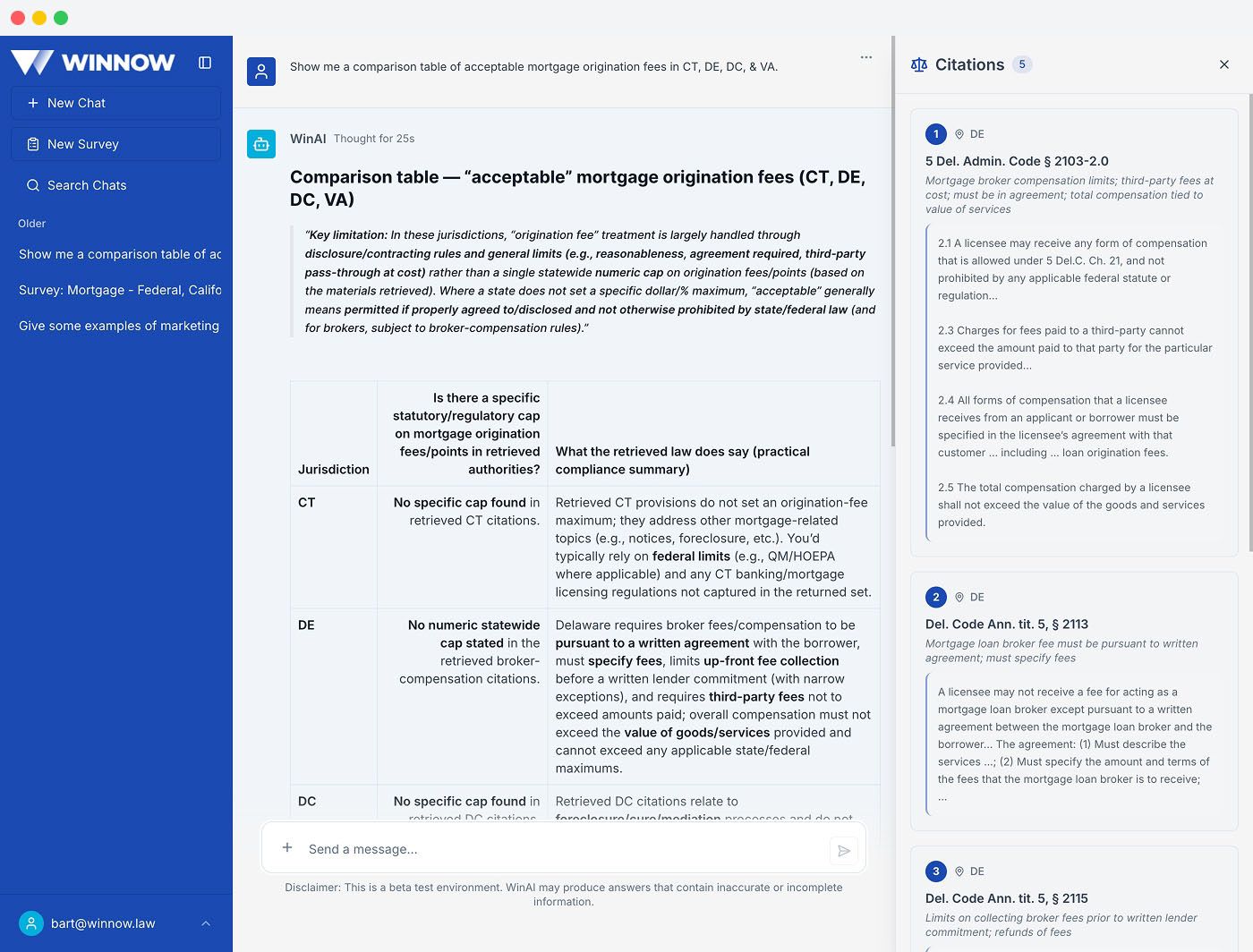
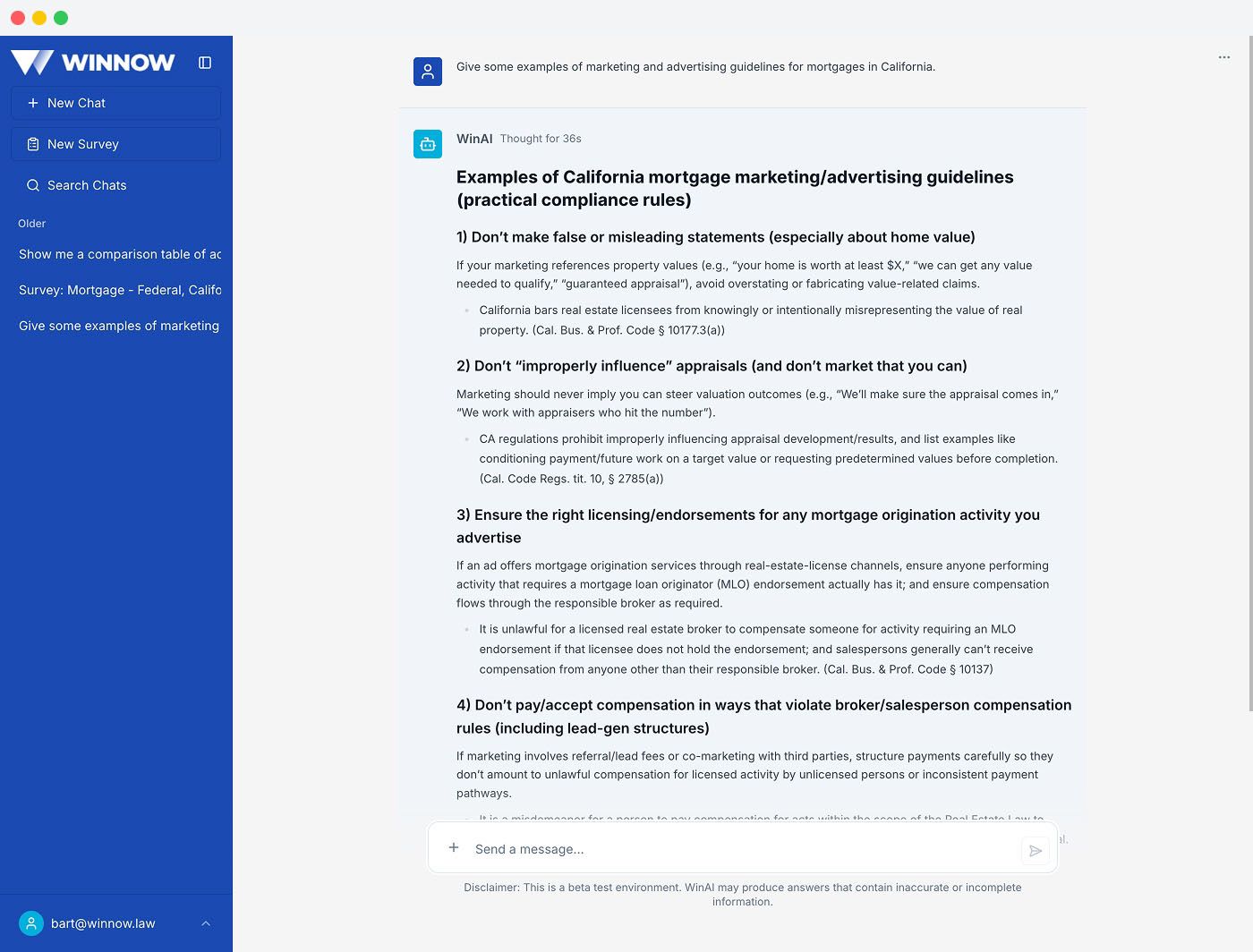
We built it around four features. The AI assistant linked every answer to the Winnow requirements and citations behind it. Any answer could become a compliance survey that Winnow monitored for changes, or a checklist or exported file. Document review took a document written for one state and regenerated it for another.
It was right over 90% of the time, and prospects who saw it were eager to sign up once it went live.
Why trust was the whole game
I joined Winnow as a founding member and spent eight years leading design and marketing, from the brand and the product experience to the marketing that sold it.
A product this technical only works if two groups buy in. Compliance folks, who are skeptical for a living, have to trust it enough to rely on it, and buyers have to get it fast enough to pick it in a crowded field. Trust was the harder of the two.
Held to an attorney's standard
The attorneys behind Winnow helped through development and beta testing, and they held the AI to the same standard as another attorney. We had to help them see that the AI was good, but it wasn't a human.
What helped was the accuracy. Paired with Winnow's data, the AI was right over 90% of the time, easily 5 to 10% more accurate than the leading AI models on their own. In legal work, that gap counts. We backed it up with legal disclaimers and a way to gather feedback, which gave the attorneys confidence in the rest.
Answers you could check, then put to work
The AI assistant was the core. You asked a compliance question and got an answer based on attorney-reviewed content, with links to the individual Winnow requirements and citations it drew on, so you didn't have to take the model's word for anything.
From there, an answer could turn into ongoing work. You could convert it into a compliance survey that Winnow kept monitoring, and you'd get a notification whenever something in that survey changed. You could also turn an answer into a checklist, or export it in a different file format to share with your team.
Document review handled a different kind of request. You uploaded documents written for one state, and Winnow regenerated them so they applied in another jurisdiction.